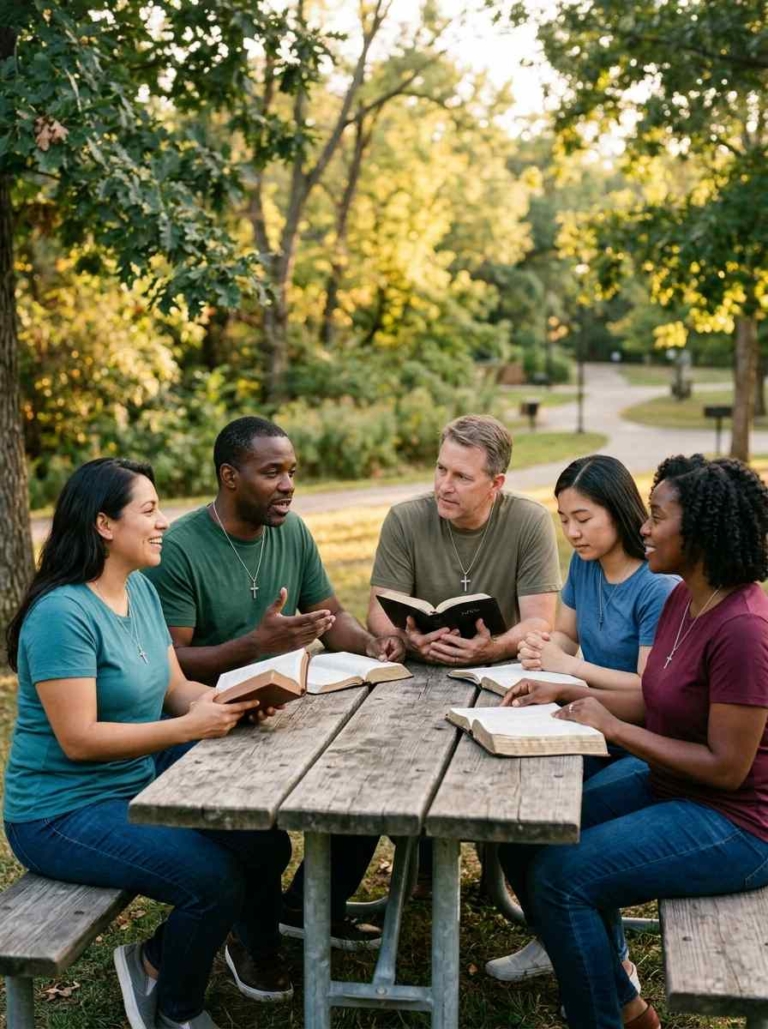
Free Life Skills Class – Become a Stronger and Healthier You 

by Professor: Dr. David Feddes

You are part of God’s special operations. Your mission is to reclaim the world for Christ. You have been saved and called to help. This class is about helping you to become a stronger and healthier you. This free life skills class is perfect for living a more confident and healthy life!

This free life skills class gives you Biblical insights and practical knowledge that make you stronger for your mission. Each topic is applied to your spiritual, physical, financial, intellectual, emotional, relational, and vocational dimensions of life.

Dr. David Feddes will bring you through the crucial areas of total fitness for you to thrive in leading others.

You will Learn and Grow in this free life skills class 

  1. Total fitness: hear God’s call to embrace practical wisdom and discipline for strengthening the whole person.
  2. Spiritual fitness: draw near to God and stand stronger against Satan through spiritual disciplines.
  3. Physical fitness: know why the body matters to God, improve bodily health, and use body language well.
  4. Financial fitness: earn a good living, escape debt, build wealth, honor God and bless others with money.
  5. Intellectual fitness: build healthy curiosity, sharp thinking, lifelong study, and courage to stand for truth,
  6. Emotional fitness: learn to face feelings honestly and discover God working through emotions.
  7. Relational fitness: heal from past relational wrongs and wounds, and interact with others in a wise and godly manner
  8. Vocational fitness: pursue God’s calling for job, career, and other tasks.

You are welcome to take this free life skills Class supported by generous vision partners. These vision partners include blessed Christian Leaders Institute Graduates, Kingdom-minded Christians and Foundations, and others.

Begin your free life skills course now! You will begin by taking a Getting Started Orientation class. Then you are encouraged to enroll in the Christian Leaders Connection Class which helps you get situated at Christian Leaders Institute. You are also free to immediately take this Total Fitness class by Dr. David Feddes.

Other Opportunities:

More Ministry Training Classes and Programs -These Ministry training programs will fuel your calling and increase your impact. Gather digital mission credentials or order official awards. These credentials are perfect for local ministry opportunities and ordination.

Ordination – Completing free classes opens you up to an ordination opportunity that is both locally and globally recognized with the Christian Leaders Alliance. Check out how you can become an Ordained Christian Leader. Low fees apply for ordination packages.

College Degree –  Earn your College Degree – Use your Christian Leaders Institute free classes for collegiate credentials. Earn certificates, diplomas and degrees. Low administration fees apply.

Male Christian minister wearing a navy “MINISTER” t-shirt and silver cross necklace while reading an open Bible inside a modern church gathering space with people in the background.

What is a Minister?

What is a Minister?

Understanding the Expansive Role of Ministers in Christianity

In Christianity, the role of a minister is both profound and multifaceted. Some are credentialed to serve as ministers in various capacities, such as spiritual leaders, pastors, teachers, and shepherds to congregations. Others are credentialed through a Christian religious society to serve the broader community.

Ministers are often the first point of contact for individuals seeking spiritual guidance and support, and they play a crucial role in the life of the church. But what is a minister, really? This article explores the expansive role of a licensed or ordained minister, highlighting their responsibilities and the qualifications that make them effective leaders in their communities.

The Story of Barnabas, Paul, and John Mark

The story of Barnabas, Paul, and John Mark offers a fascinating glimpse into the process of raising up ministers within the early church. Paul, who was called by Jesus Christ on the road to Damascus, exemplifies the calling to be a minister of the gospel (Acts 9:1-19). His journey highlights the dynamic nature of the ministerial role, which is distinct from the specific duties of an officiant.

Shortly after his conversion, Paul was mentored by Barnabas (Acts 9:26-27). Together, Paul and Barnabas ministered on missionary journeys, where they were recognized as early apostles (Acts 13:1-3). John Mark, identified as a minister in training, accompanied them on these mission trips (Acts 12:25; 13:5). However, John Mark faced challenges and abandoned them on their first missionary trip (Acts 13:13). When Paul and Barnabas planned another journey, Paul was hesitant to take John Mark along, doubting his readiness (Acts 15:36-38). Barnabas disagreed and decided to take John Mark with him, while Paul chose Silas as his ministry companion (Acts 15:39-40).

This story highlights the importance of nurturing maturing ministers and recognizing the different stages in their development. It underscores the value of having various ordained minister roles, allowing expectations to grow with the maturity and opportunities that God places before each minister.

John Mark’s story continues, though details of his development with Barnabas are sparse. However, later in Paul’s ministry, John Mark is acknowledged as a key team player in spreading the gospel (2 Timothy 4:11; Colossians 4:10; Philemon 1:24). His journey from a maturing minister to a fully ordained minister demonstrates the importance of growth and perseverance in ministry.

The Role of the Minister

1. Qualifications from Scripture

When asking what is a minister, it is essential to consider the qualifications outlined in Titus 1:5-9 and 1 Timothy 3:1-7. These passages emphasize moral integrity, sound doctrine, the ability to teach, and the management of one’s household. These qualifications reflect the comprehensive nature of ministerial responsibilities, ensuring that ministers are equipped to lead and serve effectively.

2. Connection to Churches or Christian Societies

Some ministers are deeply connected to local churches, serving in traditional pastoral roles or specialized positions such as marriage ministers or youth ministers. This connection ensures that ministers provide spiritual guidance, pastoral care, and support to their congregations, embodying the role of a shepherd to their flock.

Other ministers are called to be missionaries to a people group or within a specific ministry science topic in communities. For instance, a marriage or romance minister may be credentialed by a Christian religious society to serve a community in the area of marriage. A minister may start a soul center with Christian Leaders Alliance, plant a house church, or open a ministry practice.

3. Pastoral Care and Counseling

Pastoral care is a significant aspect of the minister’s role, offering support during times of crisis, grief, or personal struggle. This includes hospital visits, home visits, and one-on-one counseling sessions. Ministers demonstrate Christ’s love and compassion through their presence and availability, guiding congregants through major life events such as marriages, births, and funerals.

4. Higher Academic Expectations

Ministers are expected to have a higher level of academic preparation, being well-versed in theological issues, ministry practices, and church organization. This academic foundation enables ministers to engage thoughtfully with complex theological questions and to lead their congregations effectively, ensuring they provide sound doctrinal teaching and practical guidance.

5. Preaching and Teaching

Preaching or teaching are fundamental expectations for ministers. Through preaching or teaching, ministers communicate the truths of the Gospel, inspire and challenge their congregations or communities, and provide scriptural teaching that guides spiritual growth. Preaching or teaching can occur in one-on-one settings or before larger groups, such as congregations.

6. Evangelistic and Multiplicative Role

Evangelism is at the heart of the minister’s role. Ministers are tasked with spreading the Gospel and inspiring others to embrace the Christian faith. Beyond evangelism, ministers are also responsible for the multiplication of Christian leaders, identifying, mentoring, and mobilizing individuals to use their gifts and talents within the Christian community.

7. Promoting a Christian Philosophy and Worldview

Ministers are responsible for promoting a Christian worldview, helping congregants understand and apply biblical principles to all areas of life. This involves teaching how the Christian faith intersects with daily living, ethical decisions, and cultural engagement, equipping believers to live out their faith in a consistent and impactful manner.

8. Community Leadership

Ministers are called to be community leaders, caring about the development of communities and local leaders. This involves engaging with local issues, providing support and resources to those in need, and striving to make a Gospel impact on broader society. Ministers should be active in their communities, demonstrating God’s love through tangible acts of service and leadership.

9. Governing and Movement Leadership

Ministers often take on leadership roles in developing and leading local churches or ministry boards. This includes promoting tithing, developing community resources, and expanding Christian outreach. Governing and movement leadership roles typically involve leadership, administrative, and ministry business responsibilities, requiring mature ministers who can handle the complexities of organizational management and strategic planning.

Historical Context of the Ministerial Role

Throughout church history, the role of the minister has grown and changed to meet the needs of different eras and communities. From early church leaders like Augustine and Chrysostom to Reformation figures like Martin Luther and John Calvin, the ministerial role has evolved, integrating robust theological education and a focus on scripture with pastoral care and community leadership. In the modern era, ministers continue to adapt to contemporary challenges, ensuring their role remains dynamic and relevant.

Conclusion

The role of the minister is expansive and multi-dimensional, encompassing qualifications from scripture, a deep connection to local churches, pastoral care, academic preparation, preaching, teaching, evangelistic outreach, the multiplication of leaders, promoting a Christian philosophy and worldview, community leadership, and governing and movement leadership. Understanding what is a minister requires recognizing the breadth of responsibilities and the depth of commitment required to fulfill this sacred calling. Aspiring to this role is a significant undertaking, but one that is filled with opportunities to serve God, the church, and the broader community in profound and impactful ways

The Christian Leaders Institute Ministry Training and Credentialing Program

The Christian Leaders Institute (CLI) Minister Program is designed to provide high-quality, accessible, and donation-supported ministry training to individuals who feel called to serve in various capacities within the Christian community. This program equips aspiring ministers with the theological education, practical skills, and spiritual formation needed to lead effectively in their local churches, communities, or specific ministry areas.

Key Features of the CLI Minister Program: What is a Minister Program Like?

1. Accessible and Affordable Education

  • Free Courses: CLI offers a wide range of ministry courses online at no cost, making ministry education accessible to anyone with a calling, regardless of their financial situation.
  • Donation-Based Model: While the courses are free, CLI operates on a donation-based model, allowing students to contribute according to their ability. This model helps sustain the program and keeps education accessible for everyone.
  • Low-Fee Clergy Recognition Packages: After completing minister training in a specific ministerial role, individuals can become credentialed through the Christian Leaders Alliance and order packages that include clergy ID cards, letters of good standing, ordination certificates, and more.
  • Affordable Degree Program: Christian Leaders Institute offers a wide range of academic ministry training programs that allow students and credentialed ministers to continue their higher educational journey, with the opportunity to earn a bachelor’s degree that can be transferred for further studies in ministry.

2. Comprehensive Curriculum

  • Foundational Courses: The program includes foundational courses in theology, biblical studies, church history, and Christian leadership. These courses provide a solid theological grounding for all ministry roles.
  • Specialized Training: CLI offers specialized courses tailored to specific ministry roles, such as wedding officiants, chaplains, coaching ministers, youth ministers, and more. This allows students to focus on areas of ministry that align with their calling.
  • Practical Ministry Skills: The curriculum emphasizes practical ministry skills, including courses in preaching, teaching, pastoral care, evangelism, and church administration. These skills are essential for effective ministry leadership.

3. Minister Credentialing

  • Licensed Minister Recognition: Upon completing the required courses, students can be recognized as licensed ministers, allowing them to serve in various ministry capacities, such as officiating weddings, leading worship services, or providing pastoral care.
  • Ordination Pathways: CLI also offers pathways to ordination for those who seek to become fully ordained ministers. This process includes additional coursework, mentorship, and practical ministry experience.
  • Clergy Recognition: Graduates receive official clergy recognition, which includes certificates, letters of good standing, and clergy ID cards. This recognition is important for those who plan to officiate ceremonies or serve in leadership roles within their church or community.

4. Flexible Learning

  • Online Learning Platform: CLI’s courses are offered online, allowing students to study at their own pace and according to their own schedule. This flexibility is ideal for individuals who may be balancing ministry training with other responsibilities, such as work or family.
  • Global Reach: The online platform enables CLI to reach students worldwide, making it possible for individuals from diverse backgrounds and locations to receive ministry training.

5. Community and Support

  • Student Community: CLI fosters a supportive community of learners who can connect, share experiences, and encourage one another through online forums and social media groups.
  • Mentorship Opportunities: The program encourages mentorship connections, where potential ministers are guided by experienced ministers in their areas who offer guidance and support as students navigate their ministry training and discern their calling.
  • Ministry Networks: Graduates can join ministry networks, such as the Christian Leaders Alliance, which provides ongoing support, resources, and opportunities for collaboration with other ministry leaders.

6.  Ministry Science Integration

  • Focus on Ministry Sciences: The program integrates the study of Ministry Sciences, an interdisciplinary field that combines theological education with practical ministry training, leadership development, and social sciences. This approach equips students to address contemporary challenges in ministry with both biblical wisdom and practical insights.
  • Innovative Ministry Approaches: By incorporating Ministry Sciences, the program encourages innovative approaches to ministry that are informed by current research and best practices in leadership, counseling, and community engagement.

Who Should Enroll in the CLI Minister Program?

The CLI Minister Program is ideal for:

  • Aspiring Ministers: Individuals who feel called to ministry but may not have the resources to pursue traditional seminary education.
  • Volunteer Ministers: Those who serve in volunteer roles within their church or community and want to formalize their training and receive official recognition.
  • Bivocational Ministers: Individuals who are balancing secular employment with ministry responsibilities and need flexible, accessible training options.
  • Church Leaders: Current church leaders or those in leadership positions within their church who wish to deepen their theological knowledge and enhance their ministry skills.
  • Specialized Ministry Leaders: Those who feel called to specific ministry areas, such as marriage and family counseling, youth ministry, chaplaincy, or evangelism.

Ministry Sciences Articles and Posts

1. Discovering Ministry Sciences: Click Here

2. Philosophy: Click Here

3. Methodology: Click Here

4. Tropes

5. Leaders

6. Testimonies

7. Connections

8. The Study of Prayer

9. Study of the Word of God

10. Study the Confession of Sins

11. Study the Work of the Holy Spirit

12. Study of the Church Services 

13.  Study of Ceremonies

14. The Study of Sharing Christ

15. How to Share the Gospel

16. Learn how to officiate Weddings

17. How to Pray

18. Become a Volunteer Minister

19. What is an Officiant?

Conclusion

The Christian Leaders Institute Minister Program is a comprehensive, accessible, and flexible pathway to ministry training and credentialing. It is designed to equip individuals with the knowledge, skills, and spiritual formation needed to serve effectively in various ministry roles. Whether you are just beginning your ministry journey or seeking to enhance your current ministry, the CLI Minister Program offers a valuable opportunity to grow in your calling and make a lasting impact in your community and beyond.

The Christian Leaders Institute integrates a Ministry Sciences approach to it college-level curriculum and holds candidacy status with the United States Department of Education.

If you are interested a low-cost college program, click here for more details.

Explore CLI Free Courses Here:

What is an officiant?

WHAT IS AN OFFICIANT?

Understand The Roles of An Officiant in Christianity

WHAT IS AN OFFICIANT?

Understand The Roles of An Officiant in Christianity

WHAT IS AN OFFICIANT?

Understand The Roles of An Officiant in Christianity

In the Christian tradition, an officiant holds a crucial role, often acting as a clergy member who leads key life events such as marriages, funerals, and other significant ceremonies. For some, the role of an officiant in Christianity serves as an entry-level clergy recognition, encompassing various ministry roles. The position of the officiant is deeply rooted in the history and theology of the church, functioning as a bridge between the sacred and the secular by facilitating rites and sacraments that mark important milestones in the lives of believers. The field of Ministry Sciences studies this role extensively, recognizing the officiant as an essential figure within the Christian community—one who provides spiritual guidance, oversees vow exchanges, conducts ceremonies, and delivers blessings.

HISTORICAL & BIBLICAL ROOTS OF THE OFFICIANT

HISTORICAL & BIBLICAL ROOTS OF THE OFFICIANT

The role of the officiant has profound biblical origins, with roots that trace back to Old Testament figures such as Melchizedek. Melchizedek, a priest and king, blessed Abram (who would later be renamed Abraham by God) and shared bread and wine with him, setting a precedent for officiants to facilitate divine interactions and blessings. This early example of priestly blessing is recorded in Genesis 14:18-20, where Melchizedek’s interaction with Abram serves as a model for future officiants:

“Melchizedek, king of Salem, brought out bread and wine. He was a priest of God Most High. He blessed him, and said, ‘Blessed be Abram of God Most High, possessor of heaven and earth. Blessed be God Most High, who has delivered your enemies into your hand.’ Abram gave him a tenth of all.”

Officiants in the Christian tradition resemble these Old Testament priests, leading community ceremonies and teaching religious principles. The Levitical priests, for example, were responsible for conducting sacrifices, teaching the law, and blessing the people, as outlined in Numbers 6:22-27. These responsibilities closely mirror the duties of modern-day officiants, who continue to serve their communities by upholding and performing sacred traditions.

Old Testament figures as officiants

Several other Old Testament figures exemplify the role of the officiant:

  • Aaron & The Levitical Priests: Aaron, the brother of Moses, was the first high priest of Israel, and his descendants, the Levitical priests, carried out various officiant duties, including conducting sacrifices and blessing the people.
  • Samuel: Samuel, a prophet and judge, performed officiant duties such as offering sacrifices and anointing kings. His role in anointing David as king is particularly noteworthy, highlighting the officiant’s role in significant religious and communal events.

Old Testament figures as officiants

The role of the officiant continues into the New Testament, where figures such as John the Baptist and the apostles performed ceremonial and blessing functions. John the Baptist, for instance, served as an officiant in the rite of baptism, baptizing many, including Jesus Himself. This act of baptism is a central sacrament in Christianity, demonstrating the officiant’s role in facilitating spiritual milestones.

  • The Apostles:The apostles often served as officiants in various capacities, such as performing baptisms, breaking bread, and blessing believers. Their activities set a pattern for how Christian leaders would continue to perform these sacred duties.
  • Philip The Evangelist: Philip’s role in baptizing the Ethiopian eunuch is another example of an officiant’s work, showing how these figures helped to spread the Gospel and initiate new believers into the faith.

THE HISTORICAL NARRATIVE

From Voluntary Leadership to Modern Officiant Ministry

THE HISTORICAL NARRATIVE

From Voluntary Leadership to Modern Officiant Christianity

THE HISTORICAL NARRATIVE

From Voluntary Leadership to Modern Officiant Christianity

Early Christian Leadership: A voluntary Movement

Christianity began as a movement characterized by voluntary leadership. The apostles and early disciples often maintained secular professions while spreading the Gospel, embodying a bivocational model of ministry. For example, the Apostle Paul, who was a tentmaker by trade, balanced his professional work with his missionary activities. This model of voluntary leadership allowed early Christian leaders to remain self-sufficient while dedicating themselves to ministry, laying the foundation for the modern concept of officiants who may serve in a volunteer or part-time capacity.

The Shift in the Fourth Century

The legalization of Christianity under Emperor Constantine in the fourth century marked a significant shift in the church’s structure. The rise of a professional clergy created a distinct separation between ordained ministers and laypeople, leading to the de-emphasis of volunteer ministers. This shift resulted in the development of a formal church hierarchy, where roles like “deacon” and “deaconess” became more institutionalized, and lay participation in ministry became more passive.

THE REVIVAL OF THE OFFICIANT ROLE

THE REVIVAL OF THE OFFICIANT ROLE

THE REVIVAL OF THE OFFICIANT ROLE

In response to this historical shift, modern movements such as the Officiant Ministry Program at Christian Leaders Institute aim to revive the early church tradition of voluntary ministry. This program is designed for Christians who feel called to ministry but wish to serve in their local contexts as volunteers or part-time ministers. The program provides training and clergy recognition, equipping these individuals to minister effectively within their communities.

The officiant ministry program - what is an officiant?

The Officiant Ministry Program emphasizes the following principles:

  • Voluntary & Part-time Ministry: Reflecting the early church model, the program supports those who minister at a bivocational level, allowing them to balance secular work with their calling.
  • Local Contexts: Ministers are encouraged to serve within their communities, building strong, localized relationships that enhance their ministry’s impact.
  • Clergy Recognition: The program offers formal recognition, including certificates, letters of good standing, and clergy ID cards, providing officiants with the credentials needed to serve their communities effectively.

Training & Recognition

The Officiant Ministry Program offers specific training for roles such as Wedding Officiant, Romance Officiant, Funeral Officiant, and Ministry Officiant. There are other ministry roles that can also be specialized at Christian Leaders Alliance beyond those just mentioned.  Each course includes foundational skills, practical applications, and theological education tailored to specific ministry contexts. Upon completion, participants receive clergy recognition, affirming their calling and equipping them with the necessary credentials to serve their communities.

Start your journey today & make a change

The role of the officiant in Christianity is deeply rooted in the Bible, history and traditions of the church, serving as a bridge between sacred practices and the lives of believers. From the voluntary leadership of the early church to the structured clergy roles of today, officiants have played a crucial role in guiding and blessing the Christian community. The Officiant Ministry Program at Christian Leaders Institute seeks to empower a new generation of officiants, honoring the traditions of the early church while addressing contemporary needs. Through this program, Christians can embrace their calling and serve their communities, ensuring that the legacy of voluntary, localized ministry continues to thrive.

BECOME A VOLUNTEER MINISTER

BECOME A VOLUNTEER MINISTER

BECOME A VOLUNTEER MINISTER

Have you ever heard of lay ministers? In the early church, lay ministers were volunteer ministers who fulfilled many vital roles within the Christian community. These individuals were often seen as the backbone of the church’s ministry, contributing their time and talents without formal compensation. Many lay ministers were ordained as deacons, and through their faithful service, some felt called to expand their ministry into part-time or full-time roles. This organic process often led them to join the clergy, where they would progress to becoming elders and bishops.

However, after the Edict of Milan in 313 AD, which legalized Christianity in the Roman Empire, the church gained access to greater resources, and a more professionalized clergy system began to develop. This shift gradually led to a decreased emphasis on volunteer ministers. Even the ordination of deacons, once a common practice, declined over time. In the early church, women were also ordained as deacons and served in many volunteer roles, but by the sixth century, these practices had largely diminished as the professional clergy model became dominant within Christianity.

Christian Leaders Institute is studying how to revive the volunteer model of leadership, similar to that of the early church. Historically, volunteer and part-time ministers played a critical role in building the Church and spreading the Gospel. Driven by a sense of calling, equipped with spiritual gifts, and trained in specialized ministry areas, these individuals formed an army of ministers who thrived in their personal lives, marriages, and in serving their families, friends, churches, and communities. Ministry Sciences, as a discipline, seeks to study and understand this phenomenon, focusing particularly on the role and impact of volunteer and part-time ministers within the Christian tradition.

VOLUNTEER MINISTERS IN THE BIBLE

The early Church, before the era of Constantine in 313 AD, was characterized by a vibrant community of volunteer ministers. These men and women were foundational in establishing the early Christian culture and significantly contributed to the Church’s rapid expansion. One of the most important historical discoveries within Ministry Sciences is the prevalence of non-paid volunteer ministers during this period. Their dedication and sacrifice laid the groundwork for the Church’s growth and sustainability.

The New Testament provides several examples of volunteer ministers who played pivotal roles in the early Church.

Mission Ministers: Paul, Priscilla, and Aquila serve as prime examples of volunteer gospel spreaders and church planters. These individuals dedicated their lives to spreading the message of Christ without any expectation of financial compensation. Paul, in particular, was known for his tent-making work, which supported his ministry efforts (Romans 16:3-4).

Benefactor Minister Volunteers: Philemon and Apphia were wealthy Christians who ministered by planting a church in their home. Paul, in his letter to Philemon, appeals to them to support his work with Onesimus, demonstrating the role of benefactor ministers who provided for the needs of the Church (Philemon 1:2).

Phoebe: A noteworthy volunteer minister is Phoebe, who served as a “diakonos” (servant or minister) in the Church. She was entrusted by Paul to deliver the letter to the Romans and was also instructed to answer any questions the Roman Christians might have about Paul’s teachings (Romans 16:1-2).

The early Church was filled with volunteer ministers, whether deacons, bishops, or others. One prominent figure is Linus, mentioned as the first bishop of Rome after Peter. These early leaders were often unpaid, serving out of a deep sense of calling and commitment to the fledgling Christian communities.

Slaves as Ministers: In a striking example, Pliny the Younger, a Roman governor, mentioned the torture of two female slaves referred to as “ministers” in his correspondence with Emperor Trajan. These women were part of a broader movement within the early Church that mobilized women, including slaves, as ministers. This example highlights how the early Church transcended social boundaries, empowering individuals from all walks of life to serve.

The Philosophy of Volunteer Ministers in The Bible

The philosophy of volunteer ministry is deeply organic, rooted in the natural and spiritual order established by God. The Apostle Paul encapsulates this philosophy by emphasizing the importance of voluntary leadership within the family. He argues that if one cannot voluntarily lead in their own family, how can they lead in the Church?

“One who rules his own house well, having children in subjection with all reverence; (but if a man doesn’t know how to rule his own house, how will he take care of the assembly of God?)” (1 Timothy 3:4-5, WEB)

At a more profound philosophical level, the act of having children provides a powerful revelation of the nature of volunteer ministry. God has hardwired into human physical and emotional DNA the processes of making, having, and nurturing babies. We enter into voluntary relationships with the opposite sex, who, in the Christian and biblical view, are called to voluntarily love and cherish one another. From this union, we potentially voluntarily reproduce human beings. Family love is imprinted on both father and mother, and this experience of voluntarily nurturing life provides a philosophical grounding for understanding volunteer ministry.

Specialized Roles of Early Volunteer Ministers

Volunteer ministers in the early Church took on various specialized roles as needed. One significant need was the rescuing of female babies from exposure to wild animals, slave traders, and the elements. Early Christian ministers not only saved these infants but also raised them as Christians. Many of these rescued girls grew up to marry pagans, convert them to Christ, and establish Christian families. This cycle of rescue, nurture, and evangelism contributed significantly to the Church’s expansion.

During times of plague, Christian ministers distinguished themselves by caring for the sick, often at great personal risk. This ministry of care and healing was a powerful testimony to the truth and power of Christianity, leading to the development of the hospital movement within the Christian tradition.

MINISTRY ROLES INSPIRED BY THE EARLY CHURCH

The early church launched ministers, many of whom began as volunteer ministers and, over time, received financial support. Ministry Sciences studies how these roles from the early church can be translated into modern contexts to help people connect to God and flourish in their lives. A remarkable feature of early church social engagement was that this ministry was free and accessible to everyone. There was no need to pay a therapist or counselor; this was the mission of the church, which dramatically contributed to the spread of Christianity. Today, we can return to a culture of volunteer ministry.

Modern-day Roles:

  • Gospel Spreaders (Like Paul and Barnabas):
    Modern Apostles or Evangelists who lead other Christians or minister to multiply Christianity. Often, these “super spreaders” start as volunteers who share the Gospel through various platforms and roles, similar to the apostles, episcopates, or bishops in the early church.
  • Church Planters (Like Priscilla and Aquila):
    Church Planters who establish new churches in areas with little or no Christian presence, often focusing on urban centers or unchurched regions.
  • Hosts of House Churches (Like Philemon and Apphia):
    Small Group Leaders, House Church Planters, or Home Fellowship Hosts who open their homes for regular Bible studies, prayer meetings, and community gatherings, creating close-knit Christian communities.
  • Deacons like Phoebe or Elders like Titus:
    Church Deacons or Elders, usually ordained at a local church, who often receive little training due to its unavailability. Today, with online resources, these set-apart leaders can be trained as volunteer ministers to support part-time or full-time ministry staff. These ministry leaders can occupy many different volunteer roles according to their callings and gifts, such as administration, pastoral care, and service ministries.
  • Chaplains (Like Perpetua, martyred on March 7, 203 AD):
    Prison Chaplains or Hospital Chaplains who provide spiritual care and counseling to individuals in institutions such as prisons, hospitals, and military bases.
    Note: Perpetua was a young noblewoman, around 22 years old, who was a recent convert to Christianity. Her personal account of her imprisonment, one of the earliest most detailed records of martyrdom from a woman’s perspective, vividly describes her visions, unwavering faith, and the strength she drew from her Christian community.
  • Kingdom Bishops (Like Linus, Anacletus, Clement 70-99 AD):
    Denominational Leaders or Regional Overseers who provide spiritual oversight and leadership across multiple congregations or regions, ensuring doctrinal integrity and pastoral care.
  • Marriage Officiants (Detailed in the Apostolic Constitutions, 4th Century):
    Wedding Officiants or Pastoral Counselors who prepare couples for marriage through premarital counseling and officiate wedding ceremonies, ensuring that Christian values are upheld in the marriage.
  • Romance Pastoral Counseling (Like John Chrysostom, c. 347–407 AD):
    Marriage and Family Counselors or Relationship Advisors who offer guidance on choosing a spouse, fostering healthy relationships, and maintaining a Christ-centered marriage, often providing premarital and marital counseling.
    Note: John Chrysostom’s homilies on marriage emphasized the importance of love, mutual support, and the spiritual responsibilities of husbands and wives.
  • Catechists (Like Clement of Alexandria, c. 150–215 AD):
    Discipleship Coordinators or Sunday School Teachers who educate youth or new believers in the foundational truths of Christianity, helping them grow in their faith.
  • Exorcists (Like Philip of Heraclea, d. 304 AD):
    Deliverance Ministers or Spiritual Warfare Counselors who assist individuals facing spiritual oppression, providing prayer and guidance in overcoming demonic influences.
  • Healers (Like Cosmas and Damian, d. c. 287 AD):
    Healing Prayer Teams or Faith-Based Medical Ministries that combine prayer with medical care, focusing on physical and spiritual healing in church settings or medical missions.
    Note: Cosmas and Damian were twin brothers and physicians who practiced medicine without charge, combining medical care with prayer for healing.
  • Intercessors (Like Thecla):
    Intercessory Prayer Groups or Prayer Warriors who commit to regular, focused prayer for specific needs within the church, community, and the world, often organizing prayer chains and vigils.
    Note: Thecla (1st century AD) was a disciple of the Apostle Paul who devoted herself to a life of prayer, particularly interceding for the Christian community during times of persecution.
  • Prophets (Like Agabus or Philip’s Daughters):
    Preachers, Prophetic Ministers, Ministry Coaches or Advisors who provide guidance and insight grounded in the Word of God.
  • Scribes (Like Tertius or Papias of Hierapolis, c. 60–130 AD):
    Church Administrators or Digital Content Creators who manage church communications, create and distribute digital resources, and preserve church records and teachings.
  • Evangelists (Like Philip):
    Outreach Coordinators or Missions Directors who organize and lead evangelistic efforts, both locally and globally, to spread the Christian message.
  • Apologists (Like Justin Martyr, c. 100–165 AD):
    Christian Apologists or Theological Writers who defend and explain the Christian faith through writing, speaking, and debating, addressing modern challenges to Christianity.
  • Charity Workers or Medical Ministers (Like Fabiola):
    Community Outreach Coordinators or Non-Profit Ministry Leaders who run programs such as food banks, homeless shelters, medical ministries, and crisis relief efforts, serving the health of a community.
    Note: Fabiola (d. 399 AD) was a Roman noblewoman who, after converting to Christianity, dedicated her wealth and life to the care of the poor and sick. She is credited with founding one of the first hospitals in the Western world.
  • Missionaries (Like the Apostles):
    Global Missionaries or Cross-Cultural Ministry Workers who travel to different countries or cultures to spread Christianity and serve communities through education, healthcare, and development projects.
  • Lectors Officiants (Like John Chrysostom, c. 347–407 AD):
    Scripture Readers or Worship Service Coordinators who prepare and read biblical passages during worship services, ensuring that Scripture is a central part of church gatherings.
  • Psaltists Officiants (Like Ambrose of Milan, c. 340–397 AD):
    Worship Leaders or Choir Directors who lead congregational singing and musical worship, fostering an atmosphere of praise and worship during church services.
  • Gravedigger or Grief Ministry (Like Lawrence of Rome, d. 258 AD):
    Funeral Ministry Teams or Bereavement Support Groups who assist with funeral preparations, provide support to grieving families, and help maintain church cemeteries.
  • Armorers and Patrons (Like Barnabas or Phoebe):
    Donors, Mission Support Teams, or Logistics Coordinators who ensure that ministers have the resources and supplies they need, including financial support, travel arrangements, and material provisions.
  • Widows (Like Olympias of Constantinople, c. 361–408 AD):
    Women’s Ministry Leaders or Prayer Coordinators who organize prayer groups, lead women’s Bible studies, and provide support and mentoring to women in the church.
    Note: Olympias was a wealthy widow who used her resources to support the church and the poor. She was closely associated with John Chrysostom and became a deaconess, instrumental in organizing charitable works and providing spiritual guidance.
  • Deaconesses Ministers (Like Olympias of Constantinople, c. 361–408 AD):
    Women’s Ministry Directors or Deaconesses who oversee various ministries within the church, particularly those focused on serving women and children.
  • Baptism Officiants (Like Rufina, 300 AD):
    Baptism Coordinators or Church Elders who oversee the preparation for and administration of baptisms, ensuring that those being baptized understand the significance of the sacrament.
    Note: The Apostolic Constitutions, a 4th-century Christian text, mentions women deaconesses like Rufina who were specifically tasked with assisting in the baptism of women.

In conclusion, early church ministers usually started as volunteers in ministry roles, which often expanded into part-time or full-time positions. Whether volunteer, part-time, or full-time, ministers have been and continue to be an essential part of the Church’s life and mission. Ministry Sciences, by studying the history, roles, and philosophy of ministry, sheds light on how these ministers have shaped the Church and how they continue to contribute to its growth and health.

Join the movement that’s reshaping how we approach ministry in today’s complex world. Enroll in courses, connect with like-minded leaders, and become part of a growing community dedicated to transforming lives and strengthening communities through the power of God’s truth and grace. Discover how Ministry Sciences can help you fulfill your calling and make a lasting difference in the lives of those you serve.