Online Chaplain Training Courses + Study-Based Ordination Pathway
What Is The Free Homeless Community Chaplain Practice Course?
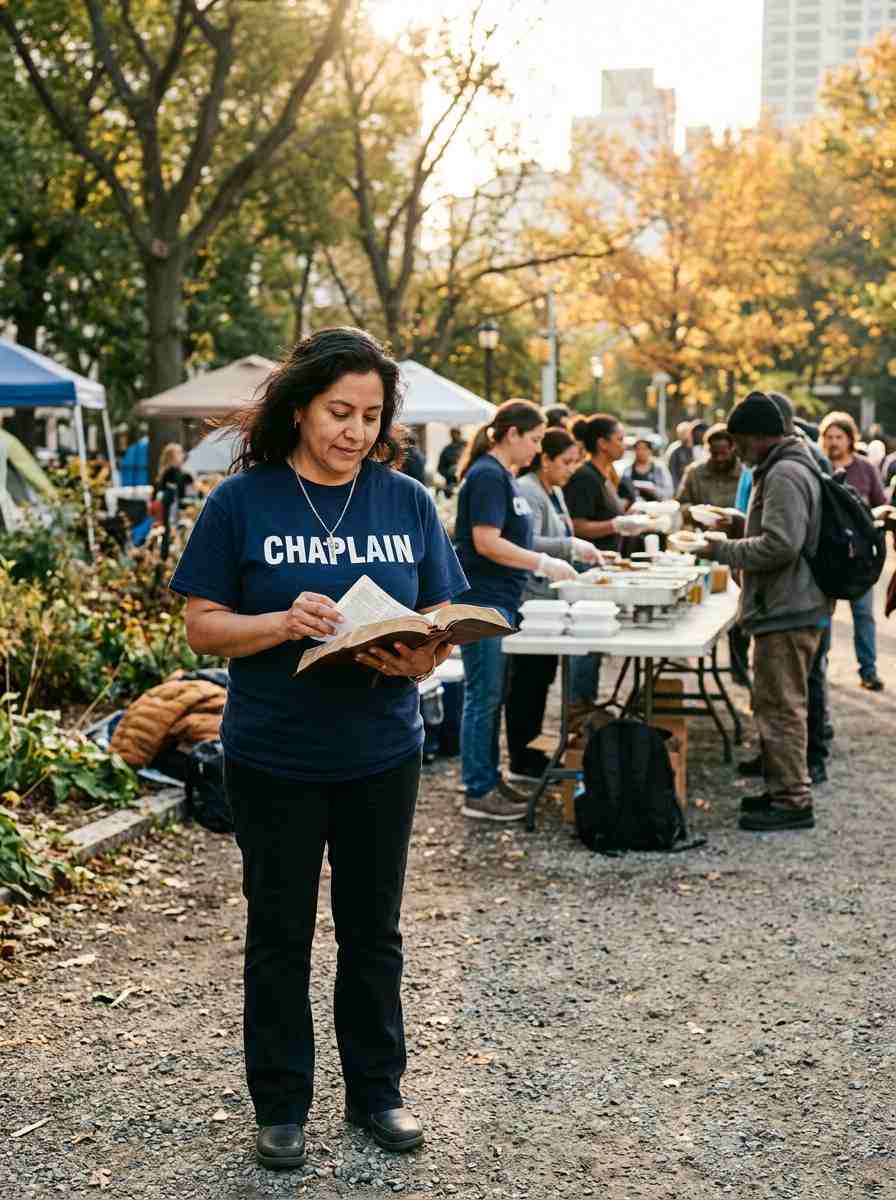
A Free Homeless Community Chaplain Training Course prepares Christian leaders to serve people experiencing homelessness with dignity, compassion, Christ-centered presence, and practical ministry wisdom. At Christian Leaders Institute, this training is offered through free-access, donor-supported, study-based ministry formation in the Christian Development School, with degree-pathway options through the Leadership Excellence School. Christian Leaders Alliance ordination is not instant and follows training, endorsements, review, and recommended commissioning.
This specialization is especially strong for volunteer and part-time chaplaincy serving shelters, meal ministries, Soul Centers, church outreach ministries, warming centers, recovery-connected programs, transitional housing environments, community partnerships, and outreach settings serving people experiencing homelessness.
Free to Access. Study-Based. Rigorous.
Christian Leaders Institute offers this course through a donor-supported model that helps make chaplain training accessible to adult learners called to serve vulnerable populations within their communities.
Homelessness is more than a housing challenge. It often involves grief, trauma, addiction struggles, family fracture, loneliness, mental health challenges, spiritual questions, economic hardship, and the loss of personal dignity. Effective chaplain ministry requires preparation, wisdom, healthy boundaries, and Christ-centered compassion.
This course helps chaplains develop ministry of presence, consent-based spiritual care, trauma-aware listening, referral awareness, healthy boundaries, and practical chaplaincy skills appropriate for homeless ministry environments.
Free does not mean casual. Study-based means prepared.
Important clarity: course access is free; degree services and credential services may include low-cost administrative fees (depending on the pathway you pursue).
Enroll now and begin this one-module training. You can move at your own pace within the standard course window.
Credit: 1 Module
Topics: 12
Quizzes: Open-book • 75 minutes • 2 attempts
Deadline: 180 days to finish
Course Overview
Team Lead: Christian Leaders Institute Team led by Rev. Henry Reyenga and Pam Reyenga
Synthesia Presenter: Haley Steiner
Program Fit
This course fits volunteer, part-time, and full-time chaplaincy serving people experiencing homelessness in shelters, meal ministries, warming centers, outreach ministries, Soul Centers, church programs, recovery-connected ministries, and community partnership environments.
This course may stand alone or be taken after the CLI Chaplain Foundations Course, which is recommended. It is especially helpful for chaplains serving in elder care, recovery ministry, neighborhood outreach, disability ministry, church visitation, seasonal ministry, and relational care settings where presence may support trust and comfort.
Best Use
This course is best used for chaplain ministry in shelters, meal programs, homeless outreach initiatives, Soul Centers, warming centers, transitional housing environments, church mercy ministries, recovery-connected outreach programs, and community partnership settings. It is especially valuable for volunteer homeless ministry, crisis-aware spiritual care, referral-ready support, and Christ-centered service among people experiencing homelessness and housing instability.
Christian Leaders Institute Empowers World Leaders with Free Online Correspondence Courses
What is a Homeless Community Chaplain?
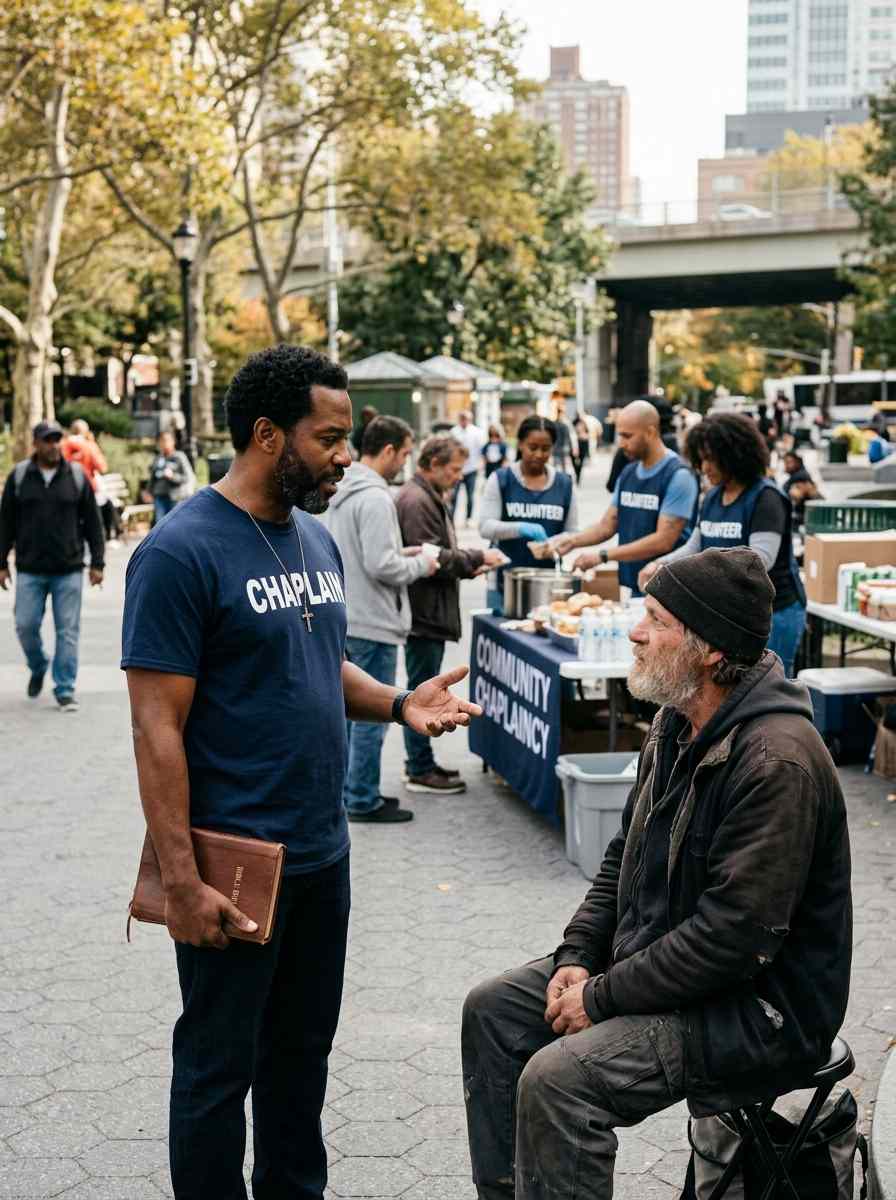
A Homeless Community Chaplain is a trained Christian presence who serves people experiencing homelessness with dignity, compassion, Christ-centered hope, and healthy boundaries. Through spiritual care, compassionate listening, encouragement, prayer by permission, emotional support, and referral-aware ministry, these chaplains walk alongside individuals facing housing instability while respecting shelter policies, organizational structures, safety requirements, community partnerships, and the inherent dignity and worth of every person they serve.
A Homeless Community Chaplain may:
provide ministry of presence in shelters and outreach settings
offer prayer and Scripture by permission
listen to people experiencing grief, loneliness, trauma, and discouragement
support churches and outreach teams serving vulnerable populations
encourage hope while respecting personal choice and autonomy
collaborate appropriately with shelters, Soul Centers, counselors, social workers, and community partners
serve during crisis situations with calm presence and referral awareness
help build safe and sustainable ministry environments
This role matters because homelessness often creates spiritual, emotional, relational, and practical challenges that require patient, compassionate, and trustworthy ministry presence.
Learn What the Homeless Community Chaplaincy Practice Course is All About!
The Homeless Community Chaplaincy Practice Course equips men and women to serve faithfully among people experiencing homelessness with Christ-centered compassion, practical wisdom, and healthy ministry boundaries.
Students learn ministry of presence, consent-based spiritual care, trauma-aware listening, confidentiality with limits, role clarity, crisis awareness, referral readiness, and respectful support within shelters, churches, outreach settings, Soul Centers, meal ministries, warming centers, transitional housing programs, and community partnerships.
The course addresses common realities faced by people experiencing homelessness, including grief, shame, loneliness, trauma echoes, addiction struggles, family fracture, spiritual questions, despair, emotional exhaustion, and loss of dignity.
Students learn how to offer prayer and Scripture with permission, listen without judgment, provide support without creating unhealthy dependency, avoid savior behavior, and maintain healthy ministry boundaries. They also learn how to recognize crisis signals, respond appropriately to suicidal language, identify situations requiring referral or emergency escalation, and collaborate wisely with shelters, churches, Soul Centers, recovery ministries, and other community partners.
A major strength of this training is helping chaplains balance compassion with wisdom. Effective homeless ministry requires both a caring heart and practical discernment, enabling chaplains to serve with Christ-centered love while respecting safety concerns, organizational policies, referral pathways, and the dignity of every person they encounter.
You Will Learn to:
Define the Homeless Community Chaplain role with clear boundaries.
Serve people experiencing homelessness with dignity, patience, and Christ-centered presence.
Offer consent-based prayer, listening, Scripture, and spiritual support without coercion.
Recognize crisis indicators and respond appropriately through referral-aware care.
Support individuals experiencing grief, trauma, loneliness, addiction struggle, and emotional distress.
Collaborate effectively with shelters, churches, Soul Centers, recovery ministries, and community partners.
Practice sustainable ministry through healthy rhythms, team support, and appropriate boundaries.
Build safe and respectful chaplaincy programs that honor dignity and organizational policies.
What a Homeless Community Chaplain Is Not
not a therapist
not a social worker
not a housing placement specialist
not a case manager
not a medical provider
not a legal advocate
not a law enforcement officer
not a shelter administrator
not a rescuer or savior
not a replacement for professional services
not above organizational policies or safety procedures
not free to ignore referral needs or emergency situations
Why This Training Matters
Homeless Community Chaplaincy matters because homelessness impacts the whole person. Many people experiencing homelessness carry layers of grief, trauma, loss, uncertainty, shame, isolation, family breakdown, addiction struggles, emotional exhaustion, and spiritual questions, often all at the same time. A Homeless Community Chaplain provides a steady, Christ-centered presence in the midst of these challenges, offering compassionate care, encouragement, dignity, and hope while supporting individuals through some of life’s most difficult circumstances.
A wise homeless community chaplain can bring:
calm instead of panic
prayer with permission
presence instead of pressure
spiritual care with boundaries
hope instead of empty words
trust instead of intrusion
This training helps Christian leaders serve wisely in some of the most challenging and meaningful ministry environments found within local communities.
Christian Leaders Institute: Two Schools, One Chaplain Training Mission
Christian Leaders Institute offers chaplain training through two schools, so you can match your preparation to your calling and goals.
1) Christian Development School (CDS): Volunteer & Part-Time Chaplain Training
The Christian Development School provides free-access, donor-supported ministry for adult learners. This pathway is especially well-suited for:
Volunteer chaplains
Part-time ministry leaders
Church visitation team leaders
Learners exploring chaplaincy calling
Those wanting structured preparation without beginning in a degree track
For Homeless Community Chaplaincy, CDS provides a practical pathway for students serving in shelters, outreach ministries, Soul Centers, recovery ministries, churches, and community partnerships.
CDS is a strong fit if you want:
Free-access, study-based chaplain training
Specialized chaplain coursework
Practical, ministry-ready tools
Flexible learning as you serve
2) Leadership Excellence School (LES): Degree-Based Chaplaincy Preparation
The Leadership Excellence School is the degree pathway at Christian Leaders Institute. It offers structured academic formation that may strengthen broader vocational growth, chaplaincy development, and future academic preparation.
For some students, LES may become a stepping stone toward broader pastoral care, community outreach leadership, mercy ministry development, nonprofit service, or chaplaincy leadership opportunities, while Homeless Community Chaplaincy remains especially strong as a compassionate volunteer and community-based ministry pathway serving people experiencing homelessness and housing instability.
Depending on program and relevance, students may pursue:
Associate Degree in Chaplaincy
Bachelor Degree in Chaplaincy
This pathway is especially useful for those seeking stronger academic formation, long-term ministry development, and expanded leadership preparation.
LES is a strong fit if you want:
A documented degree pathway for vocational ministry or professional development
Deeper academic structure and longer-term credibility
Preparation aligned with paid or institutional chaplaincy goals
Pathways Toward a Full-Time Career in Homeless Community Chaplaincy
Homeless Community Chaplaincy is best understood first as a volunteer, part-time, and community-based ministry pathway. It may support broader chaplaincy, pastoral care, community outreach ministry, shelter ministry, recovery-connected ministry, mercy ministry, Soul Center development, church outreach efforts, and other ministries serving people experiencing homelessness and housing instability.
In many institutional settings, the path toward full-time chaplaincy may include:
a Master of Divinity (MDiv) or similar graduate degree
supervised ministry experience
agency approvals, background checks, and policy training
proven care experience in high-boundary environments
Christian Leaders Institute does not replace every traditional hiring pathway. Instead, CLI helps students take real steps toward calling discernment, study-based training, volunteer service, and future readiness.
Calling Discernment Through Volunteer Chaplaincy Formation
Volunteer service helps future chaplains develop humility, practical ministry skills, and real-world experience.
Bachelor-Level Preparation as a Stepping Stone to Graduate Study
Additional ministry education may strengthen future leadership opportunities within chaplaincy, outreach ministries, nonprofits, churches, and community programs.
Alternative and Local Pathways Through Volunteer Service
Many meaningful opportunities emerge through shelters, churches, Soul Centers, recovery ministries, outreach teams, nonprofits, and local service organizations.
Strengthening the Possibility of Full-Time Chaplaincy
In some settings, full-time chaplaincy may be strengthened by:
Master of Divinity or equivalent qualifying degree
ecclesiastical endorsement
Clinical Pastoral Education
institutional approvals and onboarding
proven maturity in high-trust, high-boundary ministry settings
board certification or specialty certifications in some roles
A Wise Starting Point
Begin with study-based chaplain formation, serve faithfully in your local community, and allow experience and calling to clarify future ministry opportunities.
Moodle Delivery: Study While You Serve
Christian Leaders Institute courses are delivered through the Moodle platform at:
This format works especially well for busy adults, volunteers, and bi-vocational leaders.
The CLI → CLA Pathway: Training to Ordination
Christian Leaders Institute and Christian Leaders Alliance work together, but they do different things.
CLI = training
CLA = ordination and credentialing
Christian Leaders Store = field tools, handbooks, and optional ordination kits
Christian Leaders Alliance provides study-based volunteer and part-time clergy formation. This is not instant ordination, but study-based preparation for competency, confidence, and credibility. Ordination follows training, endorsements, review, and a recommendation for commissioning.
The Simple Pathway
Complete the Homeless Community Chaplain specialization and related formation steps.
Begin the Christian Leaders Alliance ordination pathway, which is free to participate in and donor-supported.
Submit endorsement(s) as part of the review process.
Complete profile updates and review steps required for credibility and readiness.
Receive commissioning, with laying on of hands recommended.
Order credentials and/or ordination kits if desired, which may include optional costs.
Who This Free Homeless Community Chaplain Training Pathway Is For
This pathway prepares individuals who sense a calling to serve people experiencing homelessness, families facing housing instability, shelter guests, church outreach participants, Soul Center visitors, recovery ministry participants, and community members experiencing significant life challenges. Whether you are just beginning your ministry journey or expanding an existing role, this pathway can help you move forward with clarity, wisdom, and purpose.
A) Volunteer Chaplains
Ideal for believers serving through shelters, meal ministries, warming centers, church outreach programs, Soul Centers, recovery ministries, transitional housing programs, and community outreach efforts. Volunteer chaplains provide encouragement, prayer, listening, compassionate presence, and Christ-centered spiritual care while respecting healthy boundaries and ministry guidelines.
B) Part-Time Chaplains
Many Homeless Community Chaplains serve alongside another career, ministry role, church responsibility, or volunteer commitment. This pathway prepares leaders for flexible, relationship-centered ministry among people experiencing homelessness while balancing work, family, church life, and community service.
C) Professional Chaplains Seeking Specialization
Experienced chaplains may also benefit from this pathway as they seek additional preparation for homeless community ministry environments. Chaplains serving in hospitals, hospice programs, churches, correctional facilities, recovery ministries, community outreach programs, or nonprofit organizations may pursue specialized training in shelter ministry, street outreach, trauma-aware spiritual care, recovery-connected ministry, and referral-aware chaplaincy. Pastors, Soul Center leaders, deacons, outreach directors, recovery workers, and ministry volunteers may also pursue this pathway to provide Christ-centered care among people experiencing homelessness.
A Clear 7-Step Chaplain Training Plan
A calling becomes effective when supported by preparation. This Free Homeless Community Chaplain Training plan guides you from interest to ministry readiness and ordination.
🥾 Step 1: Clarify Your Calling and Chaplain Setting
Discern where God may be leading you to serve—shelters, meal ministries, warming centers, church outreach programs, Soul Centers, recovery ministries, transitional housing environments, street outreach settings, or other community ministry contexts serving people experiencing homelessness. Understanding your ministry setting helps shape healthy expectations, appropriate boundaries, and effective ministry relationships.
🥾 Step 2: Choose Your Training Level (CDS or LES)
Students may begin in the Christian Development School (CDS) for accessible ministry preparation or continue into the Leadership Excellence School (LES) for deeper theological and leadership development.
🥾 Step 3: Begin Study-Based Chaplain Training in Moodle
Complete training online at your own pace through Christian Leaders Institute. Coursework builds biblical foundations, chaplain identity, trauma-aware listening skills, pastoral care competencies, referral awareness, safety wisdom, and ministry readiness within homeless community ministry environments.
🥾 Step 4: Practice Presence-Based Ministry with Boundaries
Homeless Community Chaplaincy is not only about what you say. It is also about how you show up. Learn to offer calm, compassionate, dignity-centered ministry while honoring emotional, spiritual, relational, organizational, and safety boundaries. Effective chaplains understand role clarity, confidentiality with limits, referral readiness, policy awareness, and consent-based spiritual care.
🥾 Step 5: Build Credibility and Trust Locally
As you grow in chaplain training, credibility matters. Trust is built through faithfulness, humility, maturity, consistency, and respect for each person’s dignity. Homeless Community Chaplains build trust by listening well, serving without judgment, avoiding savior behavior, respecting ministry structures, and offering Christ-centered care without pressure or coercion. Over time, chaplains become trusted supporters for shelter guests, outreach participants, churches, Soul Centers, ministry teams, and community partners.
🥾 Step 6: Pursue Chaplain Ordination Through CLA (If Called)
Some students will sense a call to formal recognition and ordination. If that is your path, you may pursue ordination as a Homeless Community Chaplain by completing training, submitting endorsements, updating your ministry profile, and receiving recognized credentials for public ministry service. This credential affirms your calling and provides clergy recognition for serving within homeless community ministry environments.
🥾 Step 7: Equip Your Ministry with Handbooks and Field Tools
Homeless Community Chaplaincy is built on long-term faithfulness. Continue developing your skills through ongoing education, practical ministry experience, local church involvement, community partnerships, outreach service, recovery ministry engagement, and Christian Leaders Institute training opportunities. As your experience grows, so does your ability to serve people experiencing homelessness with wisdom, compassion, dignity, and Christ-centered leadership.
Chaplaincy Specializations (Training Clusters)
Chaplain training is not one-size-fits-all. CLI’s strength is specialization-focused training.
Christian Leaders Institute provides a public accreditation-status page. The U.S. Department of Education hosts the Database of Accredited Postsecondary Institutions and Programs (DAPIP), where institutional listings can be verified.
Begin with study-based chaplain training at Christian Leaders Institute and complete the Homeless Community Chaplaincy Practice course.
Are these homeless community chaplain training courses free?
CLI offers free-access, donor-supported ministry training. Some degree services, credentials, or optional store tools may involve costs.
Is this mainly for volunteer chaplaincy?
Yes. This specialization is especially strong for volunteer and part-time ministry.
What does a homeless community chaplain do?
A Homeless Community Chaplain provides Christ-centered spiritual care, listening, prayer, encouragement, and referral-aware support among people experiencing homelessness.
Can this training help church outreach ministries?
Yes. The course strongly emphasizes safety, hygiene, consent, animal welfare, and setting-appropriate ministry interaction.
Can this course be paired with other chaplain specializations?
Yes. The course helps churches, shelters, Soul Centers, and outreach teams develop safe, dignified ministry practices.
What is the difference between training and ordination?
CLI provides training. CLA provides ordination and credentialing. Training prepares you for service; ordination follows study, endorsements, review, and recommended commissioning.
Is CLA ordination instant?
No. Christian Leaders Alliance provides study-based volunteer and part-time clergy formation. It is not instant ordination.
How long does training take?
This one-module course allows 180 days from enrollment, and students can move at their own pace.
Start Your Homeless Community Chaplain Training
If you feel called to serve people experiencing homelessness with dignity, compassion, Christ-centered hope, and practical ministry wisdom, this course is a strong place to begin.
Choose your track:
Christian Development School (Volunteer/Part-Time)
Free People Skill Confidence Course Online Christian Growth Course + Biblical Foundation for Christ-Centered Relationships Grow in Relational Confidence Through Grace, Wisdom, and Christlike Presence Have you ever wished you felt more confident with people? Many people want better relationships. Perhaps you struggle to start conversations, feel awkward in groups, avoid conflict, find it difficult […]
Free Spiritual Growth Course: Introduction to Spiritual Growth Online Christian Formation Course + Biblical Foundation for Lifelong Growth Understand Spiritual Growth Through God’s Story and Your Place in It Have you ever wondered what it truly means to grow spiritually? Perhaps you’re exploring Christianity for the first time. Maybe you’re returning to your faith after […]
Free Soul Coaching Course: Soul Coaching Skills Online Training Courses + Study-Based Ordination Pathway Learn How to Encourage Spiritual Growth with Wisdom, Prayer, and Care Do you have a heart to encourage others? Maybe people come to you when they are struggling, discerning a decision, rebuilding their walk with God, or trying to take a […]
Your Path into Homeless Community Chaplain Training Starts Here
If you are visiting this page because you sense a call toward homeless community chaplain ministry—especially serving people experiencing homelessness, shelter residents, outreach ministry participants, Soul Center communities, recovery-connected ministry settings, vulnerable families, and individuals facing housing instability—you are not alone. Many people begin searching for a Free Homeless Community Chaplain Training Course because they want to support people experiencing homelessness with compassionate presence, respectful listening, practical spiritual care, and Christ-centered encouragement.
That is where Christian Leaders Institute can help.
Study Online on Your Schedule
Christian Leaders Institute offers a Free Homeless Community Chaplain Training Course through its online learning environment. This allows you to prepare for homeless community chaplain ministry while continuing your current work, church service, outreach involvement, shelter volunteering, ministry leadership, business responsibilities, or family commitments. You do not need to relocate, pause your career, or wait for the perfect season to begin.
Many future homeless community chaplains start with a question like this:
Where can I find a Free Homeless Community Chaplain Training Course that is credible, Christian, and appropriate for real homeless ministry environments?
Christian Leaders Institute was built to help answer that question.
Accessible Training with Real Ministry Value
The goal of a Free Homeless Community Chaplain Training Course is not just information—it is formation. This training prepares chaplains to serve people experiencing homelessness, shelter residents, outreach participants, Soul Center guests, recovery ministry participants, and vulnerable community members with wisdom, emotional steadiness, pastoral sensitivity, and spiritual maturity shaped by an understanding of trauma, loss, addiction struggles, family fracture, loneliness, dignity restoration, and Christ-centered care.
Homeless Community Chaplains often serve in situations such as:
Supporting individuals facing housing instability, uncertainty, and crisis
Walking alongside people carrying grief, trauma echoes, addiction struggles, or emotional exhaustion
Encouraging individuals in disability ministry or community outreach settings
Offering compassionate listening and spiritual encouragement during difficult life circumstances
Encouraging hope, dignity, and healthy relationships within vulnerable populations
Serving in emotionally layered situations with calm presence and referral readiness
Supporting homeless ministry efforts through consent-based and dignity-centered spiritual care
This training helps you show up with care, clarity, emotional intelligence, and healthy boundaries in environments where trust is built through consistency, respect, and compassionate presence.
Choose the Training Path That Fits Your Calling
Christian Development School (CDS)
A strong starting point for volunteer and part-time homeless community chaplains seeking accessible and practical ministry preparation. This pathway helps you develop pastoral care and homeless ministry skills while remaining active in outreach programs, church ministries, shelter service, work responsibilities, or family life.
Leadership Excellence School (LES)
For those pursuing advanced ministry development, leadership training, and degree pathways that expand opportunities in pastoral care, outreach leadership, community chaplaincy, mercy ministry, recovery ministry support, and broader ministry environments.
A Simple Pathway for Homeless Community Chaplain Training
Many prospective students want a clear picture of what the process looks like.
Start with study-based chaplain preparation
Begin online courses that introduce pastoral care, active listening, ethical ministry practice, and spiritual formation.
Focus on homeless community chaplaincy skills
Develop skills specific to serving people experiencing homelessness, shelter residents, outreach participants, Soul Center communities, recovery ministry participants, and vulnerable individuals, including understanding trauma, grief, addiction struggle, dignity restoration, crisis awareness, and referral readiness.
Learn while staying active in daily life
Complete training at your own pace while balancing work, business responsibilities, family, church life, and ministry.
Practice presence with strong boundaries
Homeless community chaplaincy requires humility, emotional steadiness, confidentiality awareness, role clarity, healthy boundaries, consent-based ministry, referral readiness, and respect for organizational policies and community partnerships.
Build trust and credibility
People experiencing homelessness, shelter leaders, outreach teams, pastors, community partners, and ministry leaders value authentic relationships formed through consistency, listening, compassion, respect, humility, and servant-hearted presence.
Pursue ordination if called
Some students continue toward chaplain ordination through the Christian Leaders Alliance for recognized ministry standing.
Strengthen your work with practical ministry resources
Access tools and guidance that help chaplains serve effectively in shelters, outreach ministries, Soul Centers, meal programs, warming centers, recovery ministries, churches, and community care environments.
What Makes This Training Pathway Different
Homeless community chaplaincy requires more than compassion alone. It calls for spiritual maturity, relational wisdom, emotional steadiness, trauma awareness, and preparation that fits real homeless ministry environments.
This training emphasizes:
Biblical formation rooted in Christian faith and servant leadership
Healthy boundaries for trustworthy care
Consent-based spiritual support without pressure or coercion
Practicalreadiness for real-world homeless ministry situations
Accessibility through donor-supported free access learning
Flexibility for people balancing ministry with work, family, and church life
Specialized preparation that supports shelters, outreach ministries, Soul Centers, recovery programs, and vulnerable populations
The goal is not simply completing courses, but becoming a trusted pastoral presence among people experiencing homelessness and those serving within homeless ministry environments.
Continue Your Homeless Community Chaplain Journey
If you sense a calling to serve people experiencing homelessness, shelter residents, outreach communities, Soul Centers, recovery ministry settings, vulnerable families, and individuals facing housing instability, this may be the right time to begin preparing for homeless community chaplain ministry.
A Free Homeless Community Chaplain Training Course can help you move forward with clarity, confidence, emotional steadiness, and practical preparation while remaining active in your current responsibilities.
You may want to explore:
Homeless Community Chaplain Training Courses
Specialized chaplaincy pathways
Degree options through LES
Ordination through the Christian Leaders Alliance
Practical ministry tools and field resources
Homeless community chaplaincy is ultimately about presence — being available during moments of crisis, uncertainty, grief, loneliness, trauma recovery, spiritual searching, emotional exhaustion, housing instability, and everyday situations where encouragement, dignity, and spiritual care matter deeply.
Christian Leaders Institute exists to make chaplain training accessible so more leaders can serve people experiencing homelessness, shelters, Soul Centers, outreach ministries, recovery programs, churches, and community partnerships with wisdom, compassion, professionalism, and integrity.