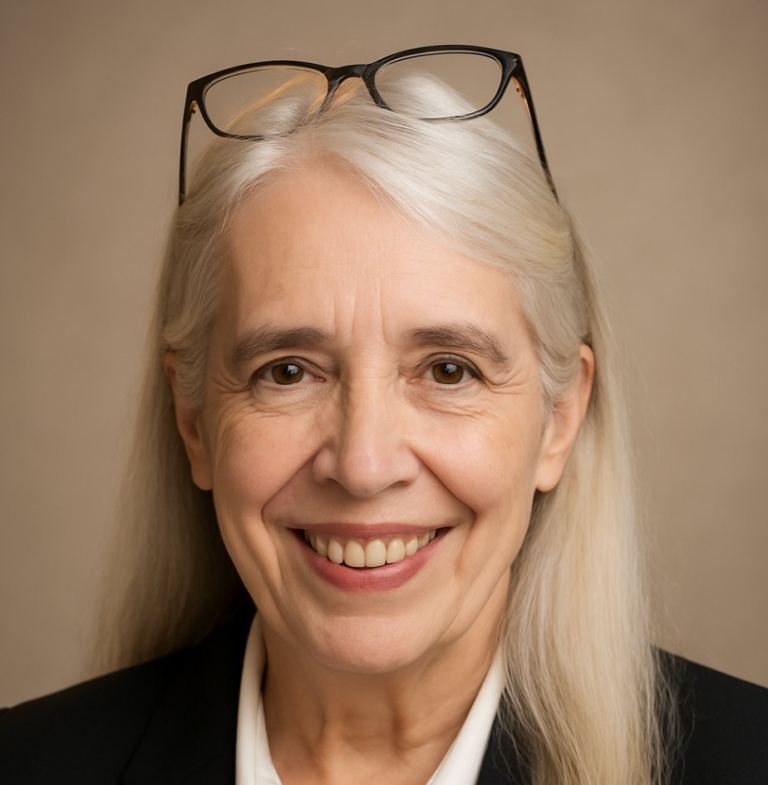
Adulthood brought more hardship—layer after layer. A marriage failed. At 30, shortly after the birth of her son, she faced a life-threatening health crisis: a bilateral pulmonary embolism. She survived back-to-back abusive relationships, one so severe it led to hospitalization. Her grandmother died unexpectedly under traumatic circumstances. Then, at 38, Christina received a diagnosis that rearranges everything: breast cancer. Chemotherapy. Radiation. Multiple surgeries. She is currently in remission.
The losses didn’t stop when treatment ended. Christina lost her job twice. She lost a significant relationship during cancer treatment. And most recently, her cousin was killed in an automobile accident—so suddenly and publicly that the news appeared online before her entire family was notified. Grief compounded upon grief, like waves that do not let up.
And yet—this is where her story turns.
One night, Christina ended up on the floor of her bedroom, overwhelmed by agony and grief. She had always known God was real in her mind, but in that moment she needed more than ideas. She cried out to Him with complete surrender.
“I felt surrounded by His presence,” Christina says. “And I sensed the words: ‘Rest, my child.’”
That encounter changed her. It didn’t erase her story, but it rewrote the meaning of it. She began attending church regularly. She enrolled in Stephen Ministry training. She started moving toward healing, not as a performance, but as a response to a God who had become personal in the darkest place.
Christina’s calling clarified through loss. After her cousin’s death, anger erupted. She demanded answers. She told God she was tired of “character development.” She wanted purpose, not platitudes.
“I asked God why I should be grateful for a life marked by trauma and tragedy,” she remembers. “And I demanded that He reveal my purpose.”
What came next felt immediate and unmistakable.
“The impression was clear,” Christina says. “Hospital Chaplain.”
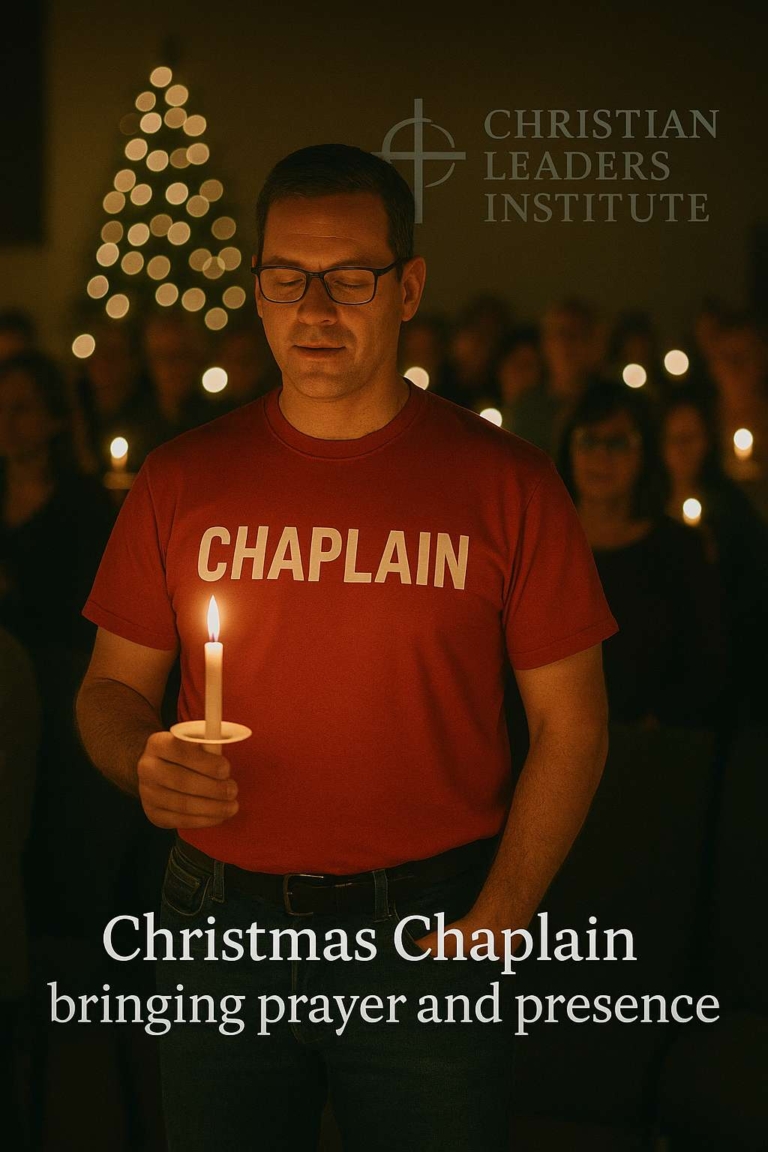
That same day, she began searching for chaplaincy training programs. The first one she found was Christian Leaders Institute. She enrolled. A few days later, she turned 40.
“The timing felt divinely orchestrated,” Christina says. “For the first time, my suffering felt aligned with purpose.”
She didn’t come to chaplaincy because she wanted a title. She came because her story trained her in the language of pain—and God was redeeming it into a ministry of presence.
Today, Christina is studying with Christian Leaders Institute while living in Wisconsin. She already holds an Associate’s Degree in Multimedia Technologies. She has trained as an ABCD (After Breast Cancer Diagnosis) Mentor and is currently training as a Stephen Minister. Those roles reflect her lived experience and her calling: to walk alongside people navigating illness, grief, and crisis—without trying to control their outcome.
“The greatest obstacle in my maturity has been relinquishing control,” Christina admits. “Trauma taught me to anticipate worst-case scenarios and prepare for disaster. I believed vigilance was protection.”
But God has been rewiring her reflexes.
“Over time, God has shown me that control is an illusion,” she says. “Only He holds the future. Surrender has become my pathway to peace.”
As she grows, Christina’s dream is becoming specific. She wants to sit with the brokenhearted in hospital rooms, crisis centers, and those moments when devastating news lands like a weight on the chest. She wants to offer presence without pressure. Compassion without control. Hope without clichés. And when the moment is right, she wants to gently point people toward Jesus.
“I feel deeply the pain of others,” Christina says, “especially those navigating sudden loss, cancer diagnoses, betrayal, and trauma.”
She also knows that high-quality chaplaincy training must be accessible. Trauma, medical bills, employment instability, and single-parent responsibility can make traditional tuition unreachable. Christina is candid about why free, study-based training matters—not as a convenience, but as a lifeline.
“Receiving biblically grounded ministry training at no cost or significantly reduced cost has made education accessible during a time when traditional tuition would not have been possible,” she says. “It feels like provision. It allows me to pursue God’s calling without placing additional financial strain on myself.”
This is part of what makes her story so significant for anyone reading a chaplaincy training page: Christina is not the exception. She is the kind of future chaplain the world is full of—called, compassionate, resilient, and ready to serve—yet often blocked by cost.
Christian Leaders Institute’s model removes that barrier.
For Christina, training is not merely education. It’s redemption stewardship.
“For 40 years, my life has been shaped by trauma and grief,” she says. “I refuse to waste the redemption God is bringing from it.”
She has heard people tell her, “God is not done with you yet,” for years. Only recently has she begun to understand what that really means.
“My prayer is to steward both my suffering and my training well,” Christina says, “so that others who sit in ashes may encounter hope.”
And that is the heart of chaplaincy training: not producing performers, but forming presence—so ordinary people with extraordinary callings can show up, with wisdom and compassion, in the places life hurts most.